Why Your Lens Matters More Than Your Camera
2026-09-25 | ***Reading Time: 18 minutes***
Intro
Remember the last time you thought about upgrading your photography gear? Well, 90% of the time, your mind probably jumped straight to the latest camera body. The one that was “just announced,” with its shiny new buttons, insane megapixel count, and blazing-fast AI Autofocus that can track the eye of an ant while mounted on a helicopter (I’m joking, of course). This is the easiest trap most photographers fall into.
But the reality in the field is totally different: Camera bodies record data, but what really creates the photo is the lens.
In this article, I want to share my perspective on why the lens is the most crucial creative tool in your bag, how it fundamentally shapes your visual identity, and why investing in exceptional glass is a far wiser move than constantly chasing the newest camera.
A Little Disclaimer
As a Global Ambassador for Tokina lenses since 2017, I’ve had the immense privilege of testing and using an incredible range of high-quality lenses, both production and pre-production units. This partnership has given me a deep appreciation for the engineering and optical precision required to make great glass.
While I proudly represent Tokina, the message here is universal: quality lenses are paramount, regardless of the brand you shoot with. This article is born from my genuine personal experience and belief, aimed at providing valuable, honest insights so you can make the best decisions for your work.
This post is not sponsored or paid in any way. My goal is simply to share my thoughts based on the questions I am frequently asked during my workshops.

The Timeless Value of Glass
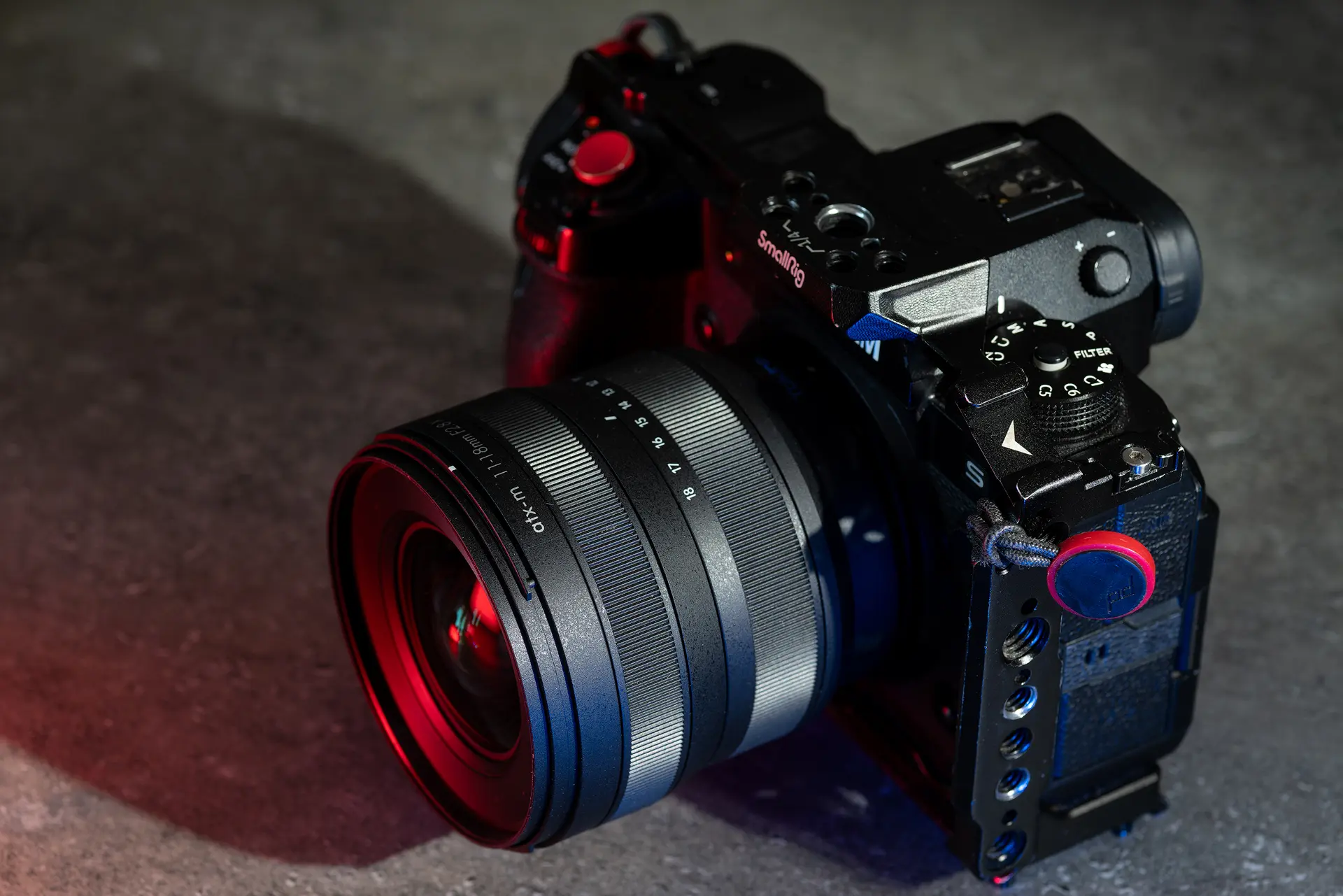
A camera body is essentially a computer built to be replaced. In 3 to 4 years, its technology will feel outdated, and its resale value will drop significantly. Most camera lineups live in a cycle of constant “major” updates (thanks marketing department!), a slightly newer sensor, a faster processor, a fancier feature set.
Lenses, however, are a completely different story. An exceptional lens is a lifelong investment. It is the one piece of gear that truly future-proofs your kit. Its optical quality, craftsmanship, and the way it renders light never go out of style. A lens you invest in today will deliver breathtaking results a decade from now, no matter what camera body you mount it on. Of course, in order to last for many years, you have to take good care of it, but that is a story for another day.
Take my own kit, for instance: I regularly pair my relatively modern (announced back in 2018), high-performance Tokina Opera 50mm f/1.4 (F-mount) with my “vintage” Nikon F100 & F5 film cameras. They work together flawlessly. The lens carries the optical quality and the creative potential, completely ignoring the multi-decade age gap of the camera body behind it.
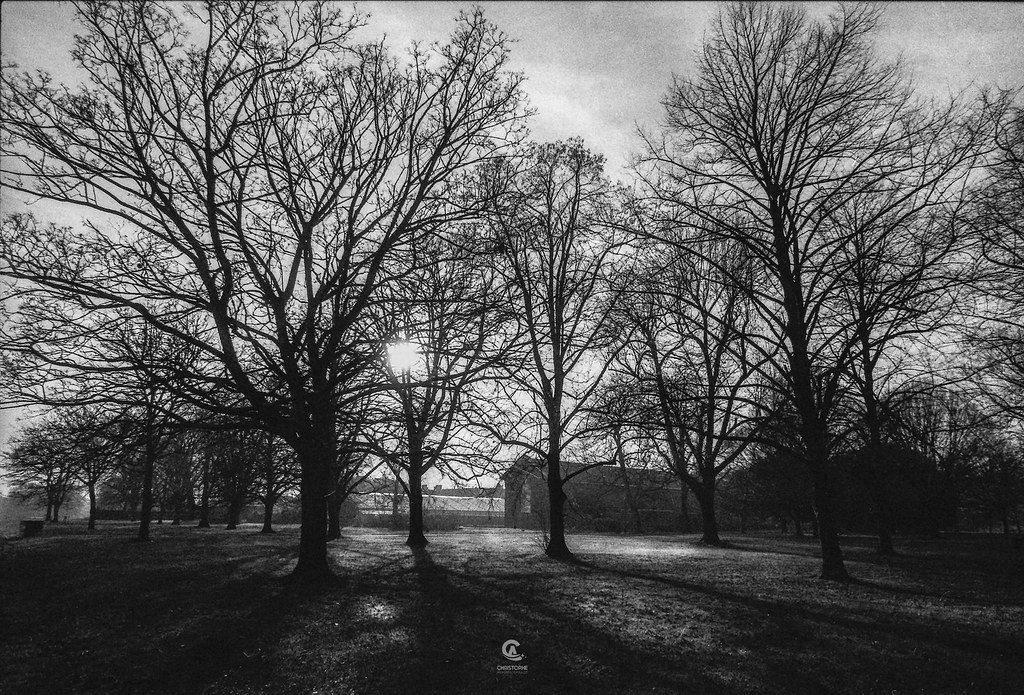
Nikon 20mm F1.8 F-mount
Nikon F100 & Ilford Pan 400 Film
London, UK
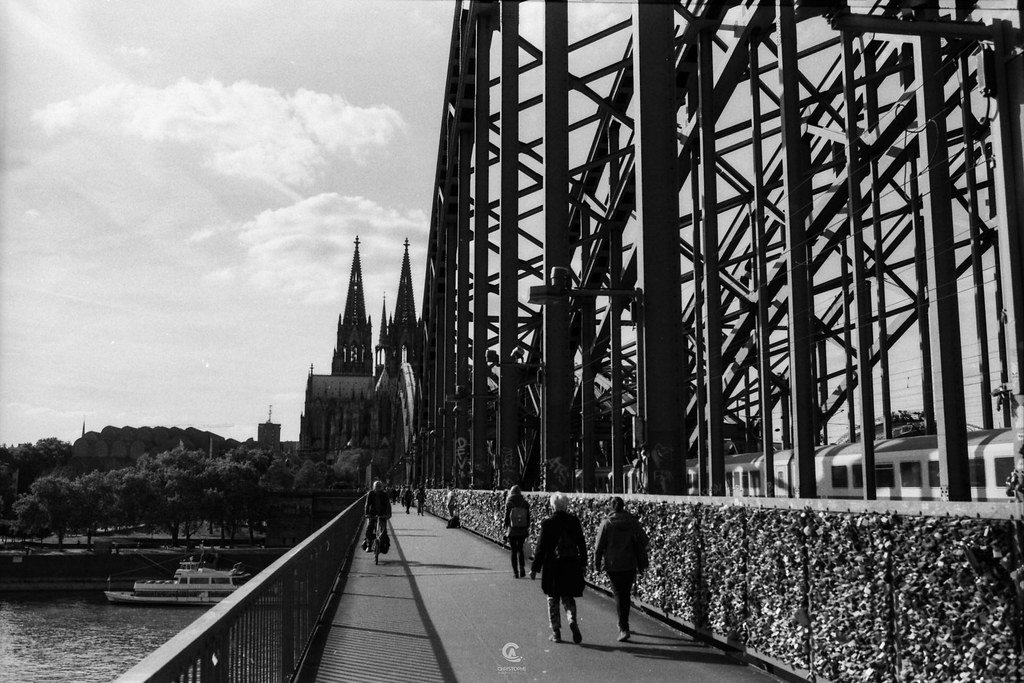
Tokina opera 50mm F1.4 F-mount (pre-production copy)
Nikon F5 & Ilford Pan 400 Film
Cologne, Germany

A highly detailed panorama of the city of London, captured from inside the Shard with my all-time favorite lens
Tokina opera 50mm F1.4 & Nikon D850 | Handheld
Character, Imperfections, and Your Visual Identity
We live in an era obsessed with technical reviews, lab charts, and edge-to-edge sharpness. But as you probably know, photography isn’t created in a laboratory.
It is created in the real world, and your lens choice dictates the signature “look” of your work:
- Micro-contrast and color rendition
- The smooth transition from focus to background (bokeh)
- The handling of backlight and atmospheric flare
Here is something often overlooked: Even optical “imperfections” can be a massive creative advantage.
Online reviews might knock a lens for having a bit of chromatic aberration, barrel distortion, or unique flare wide-open. But as photographers, once we understand how a lens behaves, those exact “flaws” become character. They add soul, mood, and a human element to an image that perfectly sterile, clinical lenses simply cannot replicate.
No camera body, no matter how advanced its AI, can fake the optical soul and character that a great lens provides.

A lens with a unique character, ideal for portraits.
Tokina SZ33mm F1.2 X & Fujifilm X-H2s | Handheld
Antiparos, Greece
Real Value vs. Incremental Upgrades
Chasing the latest camera body often comes with a steep price tag for what usually boils down to incremental improvements: a few extra megapixels or a fractionally faster burst rate.
Contrast this with investing in lenses:
- Immediate Transformation: Upgrading your glass instantly gives you better low-light performance, distinct rendering, and new creative perspectives.
- Low-Light Capability: A fast lens (like f/1.4 or f/1.8) is your best defense against high ISO noise, allowing you to isolate subjects naturally without relying on digital noise reduction.
In my experience, prioritizing glass yields a far greater return on investment and a much more noticeable leap in image quality than swapping camera bodies every couple of years.

Tokina opera 50mm F1.4 (F)
Nikon D850 | Handheld
Paris, France
In the Field: Simplifying Gear to Amplify Vision
When you rely too heavily on your camera’s tech features, you become an operator. When you learn to exploit the unique optical characteristics and focal length of your lens, you become a creator. A fixed focal length or a specific lens forces you to physically move through space, shift your perspective, pay attention to geometry, and compose with clear intention.
In the photography workshops I host, I often see participants get overwhelmed by complex menus and technical settings on their new cameras, completely missing the point: the light and the moment.
When you simplify your approach and invest in proper optical tools, your attention naturally shifts where it belongs—toward keen observation, intentional composition, and crafting images with a distinct personal identity.
Your Content Goes Here
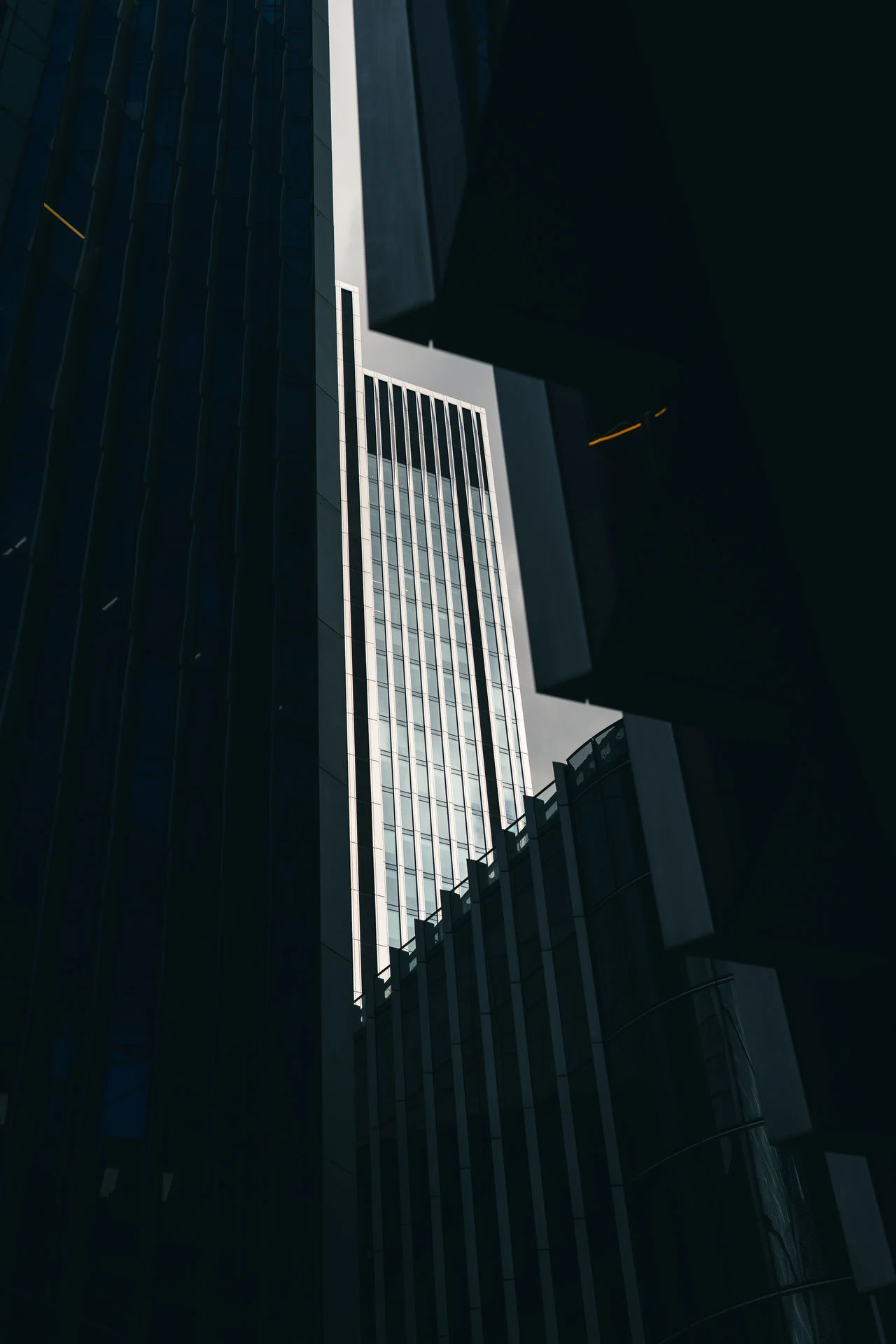
Sometimes, you have to literally look at the world from a new angle to see the creative possibilities. For this shot, I wanted to turn the complex design of these urban giants into a game of Tetris, finding the perfect lines and blocks in the chaos.
This idea of shifting perspective is a huge part of my creative process, and something I’m excited to share with you.
Tokina opera 50mm F1.4 (EF) with EF-RF Canon Adapter
Canon EOS C50 | Handheld
London, UK
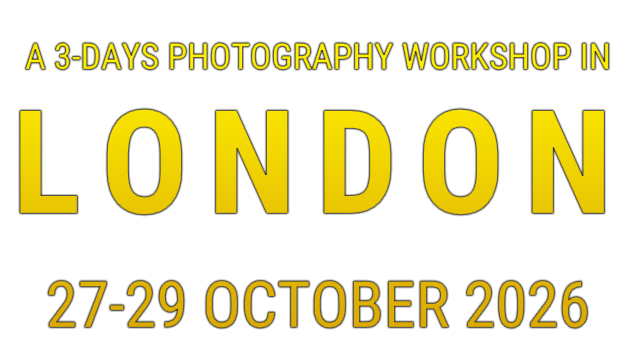

📍 London Photography Workshop (October 27–29, 2026)
In our 3-day London workshop, we leave classroom lectures behind and work strictly in the field. Learn how to harness light, geometry, and the unique optic characteristics of your lenses to build your own clean visual identity.
👉 Explore Full Itinerary & Secure Your Spot (Strictly limited to 5 participants)
Conclusion: The Lens Is Your Greatest Ally
A modern, capable camera body is certainly helpful for specific demands like high-end video or tracking fast action. I am not saying the camera body is irrelevant. However, if you want to make a real, lasting impact on the artistic quality and identity of your work, your focus must shift.
Before you start budgeting for the newest camera body, ask yourself: Am I truly getting the absolute most out of the glass I already own?
Invest in quality glass, learn its personality, and watch your photography truly flourish.

Coming Up Next: What Goes in Front of Your Glass?
Having a great lens is only half the equation when mastering light in the field. What you place in front of that glass plays a crucial role in how you capture contrast, control reflection, and shape atmospheric mood.
In the next article of this series, we’ll dive into the world of Optical Filters (CPL, ND, and Diffusion), and why relying on physical glass to craft your light in-camera will always outperform software tricks in post-processing. Stay tuned!
Join the Conversation!
This topic always sparks a great debate, and I love hearing what other photographers value in their gear.
Drop a comment below and let’s chat:
- What are your honest thoughts on the Camera Body vs. Lens debate?
- How many lenses do you currently use in your core kit?
- If you could invent a single, theoretically perfect lens for your work, what would its specs be? (Focal length, aperture, and magic feature!)



Leave A Comment